





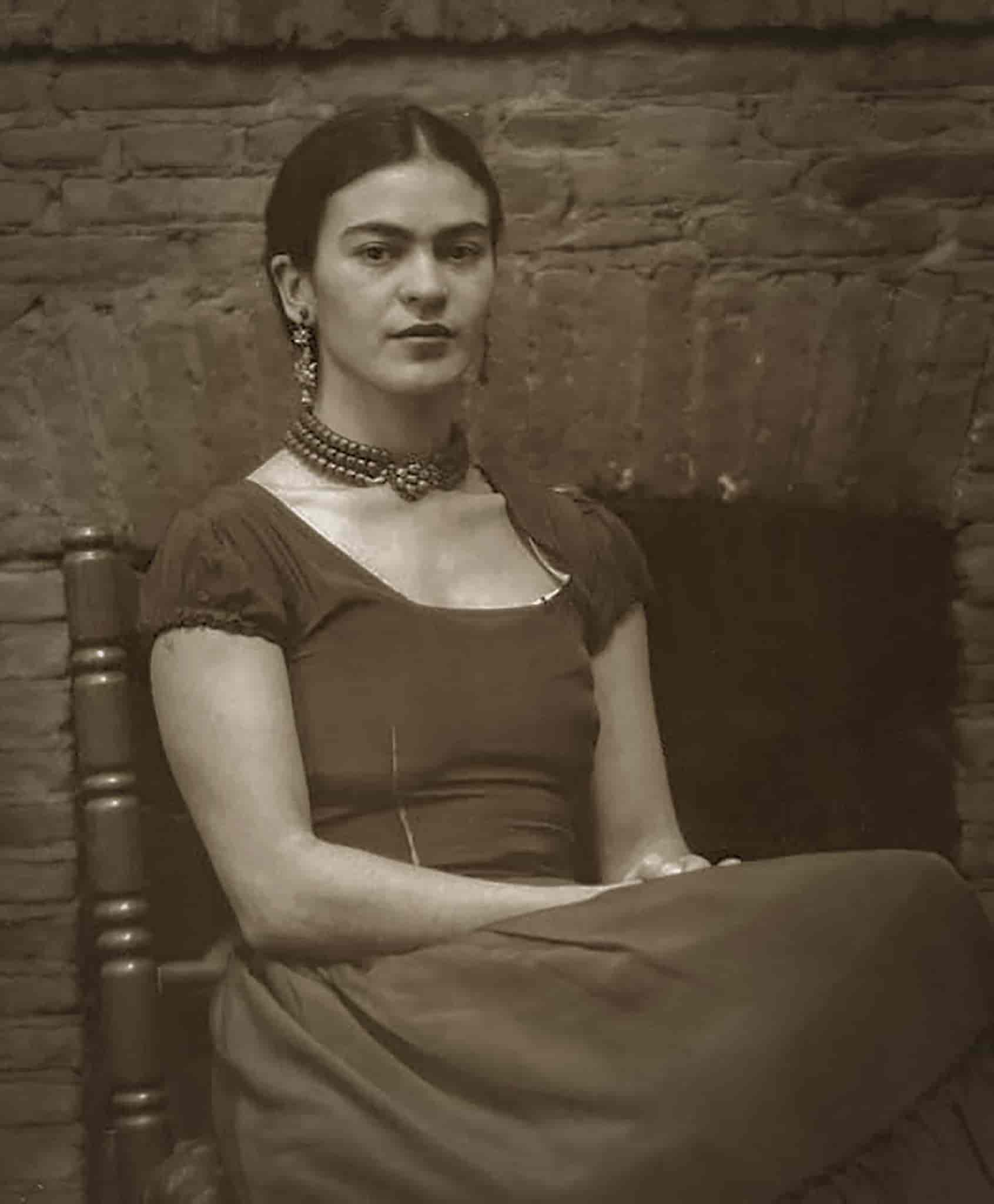
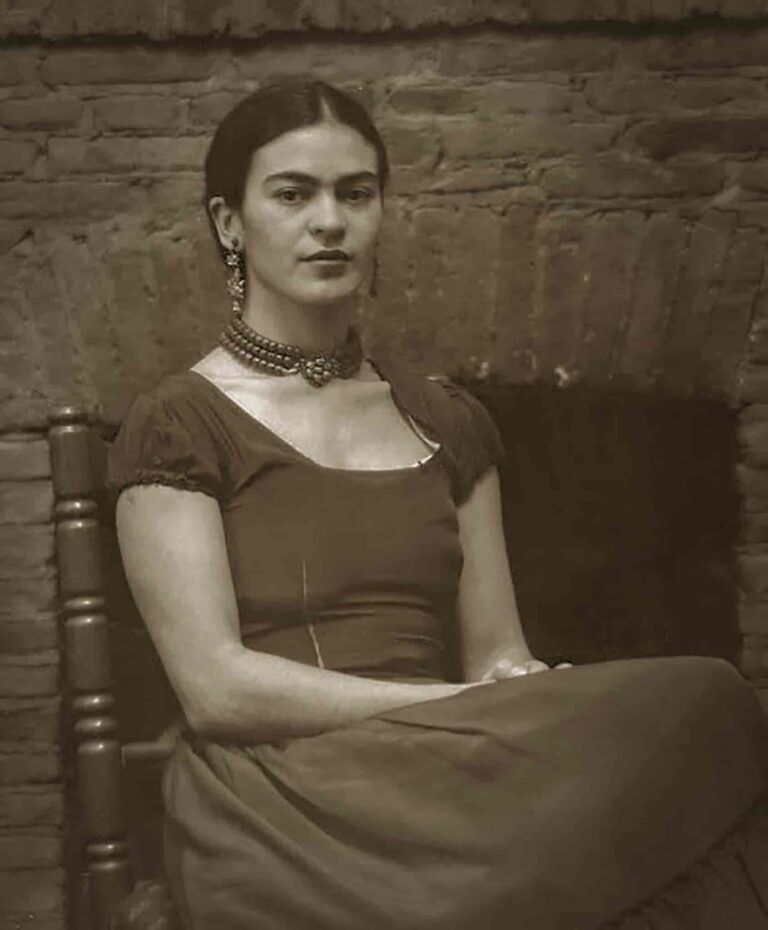
Some artists paint pictures. Frida Kahlo painted her own soul, cracked it open, and dared the whole world to look. Decades after her death, she remains one of those rare historical figures who feels somehow more alive now than she did in her own lifetime, her unibrow and flower crown plastered across tote bags, murals, and university dorm walls from Mexico City to Manila.
But underneath the merchandise and the meme worthy face is a genuinely extraordinary, often heartbreaking life story that deserves more than a surface level glance. Who was the woman behind that famously unflinching gaze, and how did so much physical suffering produce such vivid, defiant art? This guide walks through her real biography step by step, separating documented fact from the myths that have piled up around her like layers of paint on canvas.
Who Was Frida Kahlo?
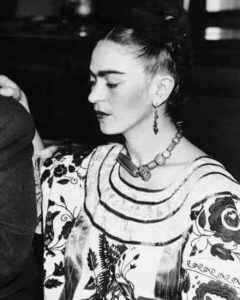
Frida Kahlo was a Mexican painter, born Magdalena Carmen Frida Kahlo y Calderón, widely regarded as one of the most significant artists Mexico has ever produced. She was best known for uncompromising and brilliantly colored self-portraits that deal with themes such as identity, the human body, and death, and even though she’s often lumped in with the Surrealist movement, she actually rejected that label outright.
Her work wasn’t born from dreams or abstract theory; it was born from lived, physical pain, chronic illness, and a marriage that wrecked her heart about as often as it healed it. What makes her so endlessly fascinating is that she turned every ounce of that suffering into art rather than letting it silence her, which is probably why generations of artists, feminists, and everyday people who’ve faced their own hardships continue to see themselves reflected in her paintings.
Early Life, Birth and Family Background
Frida Kahlo was born on 6 July 1907 in Coyoacán, a village on the outskirts of Mexico City. Interestingly, she would later tell people she was born in 1910, the year the Mexican Revolution erupted, likely because she wanted her own birth story tied symbolically to her country’s rebirth.
That’s a pretty bold move, rewriting your own age to align with a national myth, but it tells you a lot about how she viewed herself: not just as an individual, but as someone whose personal story was inseparable from Mexico’s. She grew up the third of four daughters in a household that, while not wealthy, was intellectually rich and creatively charged from the very start.
Birthplace and the Blue House
Kahlo stated that she was born at the family home, La Casa Azul, though according to the official birth registry, the birth actually took place at the nearby home of her maternal grandmother. Regardless of that small discrepancy, the Blue House, with its vivid cobalt walls and courtyard full of plants, became the emotional center of her entire life.
She was born and spent her childhood in this home, and later returned to live there with her husband Diego Rivera for the last thirteen years of her life. Think of it as the one constant anchor in an otherwise turbulent existence no matter how far she traveled or how much chaos swirled around her marriage, that house in Coyoacán was always home.
Her Parents, Guillermo and Matilde Kahlo
Her father, photographer Guillermo Kahlo, originally from Germany, had immigrated to Mexico in 1891 after epilepsy caused by an accident ended his university studies. He taught Frida photography retouching skills as a child, an experience that quietly shaped her eye for composition long before she ever picked up a paintbrush.
Her mother, Matilde Calderón y González, was born in Oaxaca to an Indigenous father and a mother of Spanish descent, making Frida’s own heritage a striking blend of European and Mexican Indigenous roots. That mixed ancestry wasn’t just a biographical footnote for her it became a core part of her artistic identity, since she frequently used Indigenous Mexican symbolism, dress, and folklore as the visual language of her self-portraits.
Childhood Illness and the Bus Accident
Frida’s body became a battlefield long before she became famous, and honestly, it’s hard to read about her childhood without feeling a knot in your stomach. She wasn’t dealt an easy hand physically, and the scars from those early years, both literal and figurative, would go on to define nearly every painting she ever created.
Surviving Polio
At around six years old, Frida developed polio, and for nine months underwent treatment, often left unattended. The illness left her right leg noticeably thinner than her left, a permanent limp that she covered for the rest of her life beneath long, colorful skirts.
Her father, ever supportive, encouraged her to take up sports during recovery, and she ended up playing soccer, swimming, and even wrestling, activities that were almost scandalously unusual for a Mexican girl at that time. It’s a small but telling detail: even as a child, Frida was already pushing against the boundaries society tried to draw around her.
The 1925 Accident That Changed Everything
Then came the event that arguably reshaped the entire trajectory of her life. At eighteen, while riding a bus home from school with her boyfriend Alejandro Gómez Arias, the vehicle collided with a streetcar. A steel handrail impaled her through the hip, and her spine, pelvis, ribs, and collarbone were all fractured in the collision.
She would undergo roughly 32 surgeries over the rest of her lifetime because of injuries sustained that single afternoon. It was during the agonizing months of recovery, confined to a body cast and unable to move, that she picked up a paintbrush for the first time as a way to fill the empty hours and process unbearable pain, and in doing so, she accidentally discovered the medium that would define the rest of her existence.
How Old Was Frida Kahlo? Age and Death
Frida Kahlo was born on July 6, 1907, and died on July 13, 1954, which means she lived to be 47 years old, passing away just one week after her birthday. That number alone doesn’t really capture the weight of her life, though, because so much of it was spent in physical agony that most people never have to endure even briefly. By the standards of her era, dying at 47 wasn’t shockingly early, but given how much chronic illness, surgery, and suffering she packed into those decades, it can feel like she lived several lifetimes compressed into one body.
Cause of Death and Final Days
In her last days, Kahlo was mostly bedridden with bronchopneumonia, though she made a public appearance on 2 July 1954, participating with Rivera in a demonstration against the CIA invasion of Guatemala. That final act of political defiance seemed to worsen her condition significantly, and on the night of 12 July 1954, she developed a high fever and was in extreme pain; at approximately 6 a.m. on 13 July, her nurse found her dead in bed.
The official cause of death was listed as pulmonary embolism, although no autopsy was ever performed, which has fueled decades of speculation that her death may have actually resulted from an overdose, whether accidental or deliberate. We’ll likely never know for certain, and honestly, that lingering uncertainty feels strangely fitting for a woman whose entire life resisted simple, tidy explanations.
Nationality, Heritage and Tribe
Frida Kahlo was unmistakably Mexican, and that national identity wasn’t just a passport detail to her it was practically a religion. She leaned hard into Mexican Indigenous culture throughout her adult life, frequently wearing Tehuana dresses associated with Indigenous women from the Isthmus of Tehuantepec region, along with elaborate flower headdresses and traditional jewelry that became inseparable from her public image.
While she wasn’t from a specific Indigenous “tribe” in the formal sense, her mother’s mixed Spanish and Indigenous ancestry gave her a personal connection to that heritage that she actively celebrated rather than downplayed, especially as a counterpoint to the European, specifically German, side of her family through her father.
It’s worth noting that during the late 1930s, amid rising Nazism in Germany, Frida actually leaned into and asserted her German heritage, showing that her relationship with her own mixed identity was complicated and shifted depending on the political moment, rather than being fixed in one direction.
Husband: Frida Kahlo and Diego Rivera
If there’s one relationship that defined Frida Kahlo’s public and private life in equal measure, it’s her marriage to Diego Rivera, the legendary Mexican muralist. Their marriage, which began in 1929, was famously complicated, and they divorced in 1939 before remarrying in 1940.
They first crossed paths years earlier, back when Frida attended the National Preparatory School in 1922 and watched Rivera working on a mural there, reportedly telling a friend she would marry him one day. That’s the kind of detail that sounds almost too perfectly written for a movie script, except it actually happened, and it eventually came true, despite her own mother’s strong objections to the match.
Marriage, Divorce and Remarriage
Frida married Diego Rivera in 1929, when she was twenty-two and he was forty-three, a significant age gap that didn’t seem to bother either of them much at the time. Theirs was never a traditional union, and both engaged in extramarital affairs, with one particularly devastating betrayal coming from Rivera’s affair with Frida’s own sister, Cristina, which reportedly drove Frida to cut off most of her signature long dark hair in response.
Despite the infidelities, heartbreak, and the eventual divorce, something kept pulling them back together, and they remarried just a year later in 1940. When Frida finally died in 1954, Rivera didn’t hide his grief, later writing in his own memoir that the day she died was the most tragic of his life and that he had realized, too late, that loving her had been the most wonderful part of his entire existence.
Family Life and the Question of Children
One of the quieter tragedies of Frida Kahlo’s life involves the children she desperately wanted but was never able to have. She experienced multiple miscarriages during her marriage to Rivera, including a particularly painful loss in Detroit in 1932 that she later processed through her raw, unflinching painting “Henry Ford Hospital.”
Her body, already weakened by the childhood accident, simply couldn’t carry a pregnancy to term, and that repeated grief shows up again and again throughout her artistic output, almost like a wound that never fully closed no matter how many times she tried to paint her way through it.
As for siblings, she grew up alongside two older sisters and one younger sister, and her relationship with her family, particularly her father, who actively encouraged her artistic pursuits by rigging up a special easel so she could paint while bedridden, played a meaningful role in shaping the woman she eventually became.
Religion and Spiritual Beliefs
Religion is one of those areas of Frida’s life that resists a tidy, single-word answer, much like everything else about her. She claimed her father was Jewish and that her paternal grandparents were Jews from the city of Arad, though this claim was challenged by genealogists who found he was instead a Lutheran. Her mother, on the other hand, was a devout Catholic, which meant Frida was raised in an environment where two very different religious traditions sat side by side.
As an adult, she moved decisively toward Communism and political atheism, becoming deeply involved in left-wing political circles and even helping the exiled Soviet revolutionary Leon Trotsky secure asylum in Mexico.
Yet despite that political turn away from organized religion, her paintings remain saturated with spiritual and religious imagery, blending Catholic iconography with pre-Columbian and Indigenous Mexican symbolism in a way that suggests she never fully abandoned the idea of the sacred, even if she rejected the institutions built around it.
Frida Kahlo’s Most Famous Book: The Diary
Among the most treasured pieces of Kahlo memorabilia is The Diary of Frida Kahlo: An Intimate Self-Portrait, covering the years 1944 to 1954 and published in 1995, decades after her death. This isn’t a polished memoir written for public consumption; it’s a raw, often chaotic mix of sketches, watercolor illustrations, stream-of-consciousness writing, and deeply personal reflections on pain, love, politics, and mortality.
Reading it feels less like reading a book and more like peering directly into someone’s unfiltered inner world, which is exactly why biographers and fans treat it as such an essential window into who she really was beneath the public persona. Alongside the diary, The Letters of Frida Kahlo offers another layer of insight, while “Frida: A Biography of Frida Kahlo” by Hayden Herrera, first published in 1983, remains the definitive scholarly biography that reintroduced her to a global audience and helped ignite the modern wave of “Fridamania.”
Instagram and Modern-Day Digital Presence
Here’s an important clarification that often confuses people Googling her name alongside modern terms: Frida Kahlo did not have an Instagram account, simply because she died in 1954, decades before social media existed in any form. What you’ll find today are fan-run tribute accounts, museum-managed pages tied to institutions like the Frida Kahlo Museum at La Casa Azul, and various estate-licensed brand accounts that share her artwork, photographs, and quotes with millions of followers worldwide.
These accounts have effectively become the modern stand-ins for a personal presence she obviously never had the chance to build herself, and the sheer volume of engagement they generate says a lot about how thoroughly her image has been absorbed into contemporary visual culture, almost as if she’d been famous on the internet the whole time rather than over half a century before it existed.
Net Worth, Legacy and the Business of “Fridamania”
Talking about Frida Kahlo’s “net worth” requires a bit of nuance, since she wasn’t operating in anything resembling today’s art market during her own lifetime. She struggled to make money from her art throughout her career, selling only a small number of paintings and receiving a handful of commissions, while her work was frequently overshadowed by her husband’s far more celebrated murals.
Ironically, the financial story flips entirely after her death: original Kahlo paintings now sell for tens of millions of dollars at auction when they surface, and licensing of her image across merchandise, exhibitions, and media has turned her into what’s often described as a commercial phenomenon.
The twenty-first-century Frida is both a star, a commercial property complete with fan clubs and merchandising, and an embodiment of the hopes and aspirations of a near-religious group of followers. So while Frida herself never accumulated personal wealth comparable to her current cultural value, her estate and the broader “Fridamania” industry built around her name now represents a market worth hundreds of millions of dollars collectively.
| Aspect | During Her Lifetime | Posthumous Reality |
|---|---|---|
| Art sales | Few paintings sold, struggled financially | Individual works now sell for millions at auction |
| Public fame | Overshadowed by Diego Rivera | Global icon, arguably more famous than Rivera |
| Image use | No licensing or merchandising | Worldwide merchandise, museum exhibits, films |
Conclusion
Frida Kahlo’s life reads almost like one long act of defiance against a body and a world that kept trying to break her. Born into a mixed Mexican and German household, marked early by polio and then nearly destroyed by a catastrophic accident, she still managed to turn unimaginable physical and emotional pain into a body of work that continues to resonate with people nearly seventy years after her death at 47.
Her marriage to Diego Rivera gave her both profound companionship and recurring heartbreak, her political convictions shaped how she saw herself within Mexico’s broader story, and her unfinished diary still offers one of the most intimate looks any artist has ever left behind. Whatever you make of the modern commercialization of her image, the woman underneath all that merchandise was someone who refused, again and again, to let suffering have the final word.
Frequently Asked Questions on Frida Kahlo Biography
1. How old was Frida Kahlo when she died? She was 47 years old, born July 6, 1907, and died July 13, 1954.
2. Who was Frida Kahlo’s husband? Mexican muralist Diego Rivera, whom she married in 1929, divorced in 1939, and remarried in 1940.
3. Did Frida Kahlo have children? No surviving children; she suffered multiple miscarriages due to injuries from her 1925 bus accident.
4. What nationality was Frida Kahlo? Mexican, with mixed German (father) and Spanish-Indigenous Mexican (mother) heritage.
5. Does Frida Kahlo have an official Instagram account? No, she died decades before social media existed; existing accounts are run by museums, her estate, or fans.






+ There are no comments
Add yours