






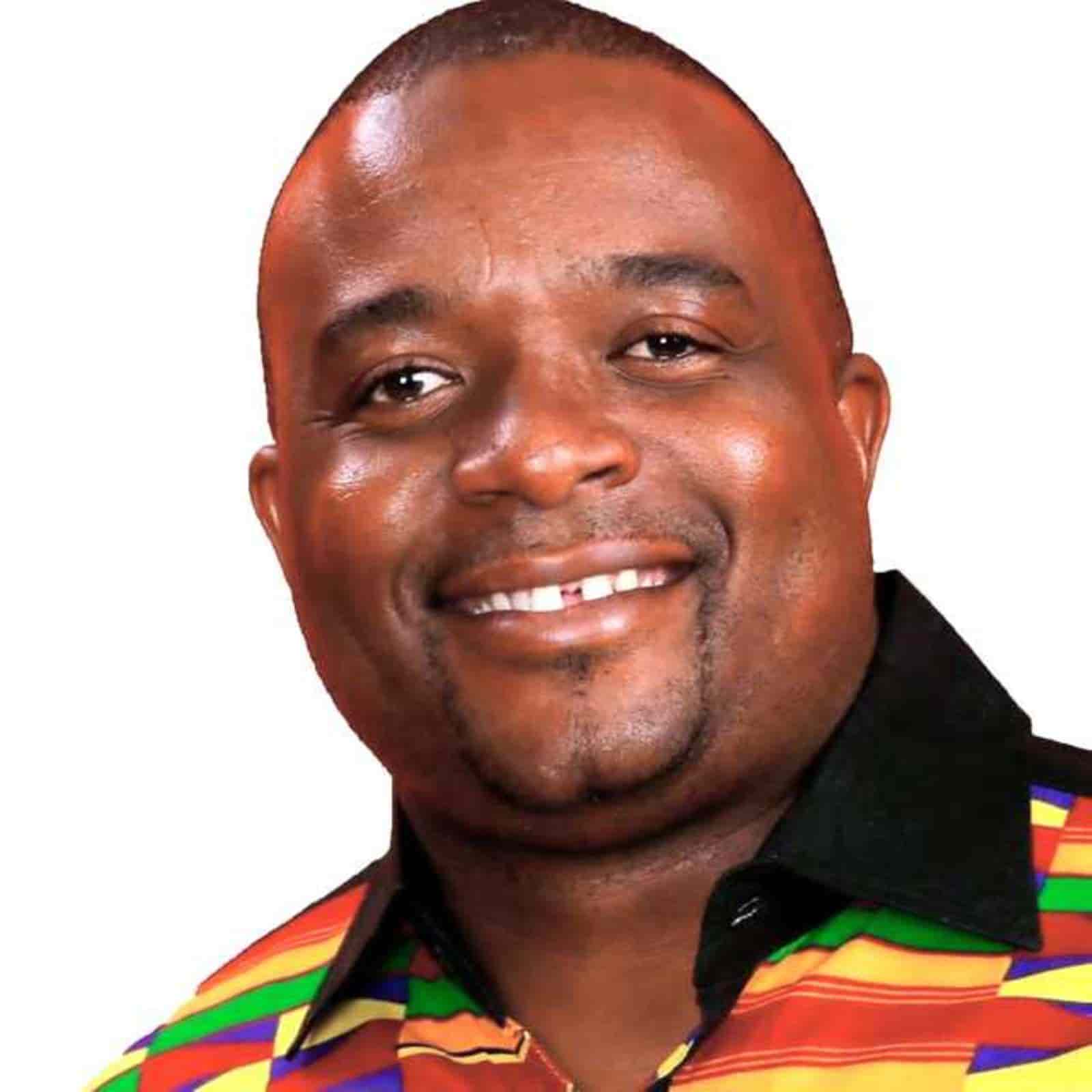
If you’ve spent any time following African civil society, constitutional reform movements, or human rights advocacy over the past two decades, you’ve probably come across the name Brian Kagoro. He’s one of those figures who shows up everywhere in courtrooms, in policy meetings, in newspaper op-eds, and lately, in headlines about a dramatic deportation from Kenya. So who exactly is this man, and why does his story matter? Let’s dig into it properly, piece by piece, the way you’d want a friend who actually did the homework to explain it to you.
Who Is Brian Kagoro?
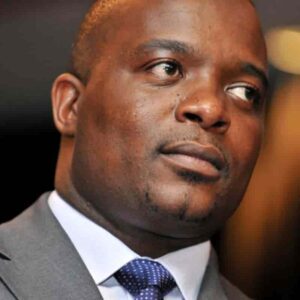
Brian Bright Tamuka Kagoro is a Zimbabwean constitutional lawyer, human rights advocate, and self-described Pan-Africanist whose career has stretched from courtroom battles in Harare to senior leadership roles inside some of the continent’s biggest development and rights organizations. Think of him as someone who’s worn three hats simultaneously for most of his adult life: lawyer, activist, and institutional power player.
That’s not an easy combination to pull off, because lawyers are trained to work within systems while activists often exist to challenge them yet Kagoro built an entire career bridging that gap. He’s known internationally for co-founding major civil society platforms in Zimbabwe during a period when doing so was genuinely dangerous, and for later climbing the ranks at organizations like the Open Society Foundations (OSF), the United Nations Development Programme (UNDP), and ActionAid International.
What makes his profile particularly interesting is that he’s never really settled into one lane he’s been a litigator, a policy advisor, an academic commentator, and, by his own description, a “leadership development expert and social entrepreneur.” If you’re trying to picture the kind of person who gets invited to speak at African philanthropy conferences one month and ends up the subject of a diplomatic incident the next, Kagoro is a pretty good case study.
Brian Kagoro’s Early Life and Origin
Family Background
Kagoro was born in 1974, and according to his own recollections shared in interviews, he grew up in a farming district near Harare, Zimbabwe. He has described his parents as “graduates and professionals” who were “neither rich, nor poor.” That detail matters more than it might seem at first glance, because it tells you he didn’t come from either elite wealth or grinding poverty he came from a striving, educated, middle-class Zimbabwean household at a time when that demographic was relatively rare and often politically conscious.
His family wasn’t just bystanders to history, either. By his own account, he grew up largely in a family of people who were engaged in the liberation struggle, which means the politics of resistance and nation-building weren’t abstract concepts to young Brian they were dinner-table conversations and lived realities.
Imagine being a kid whose household discussions revolved around colonial injustice and the fight for self-determination; that’s not a normal childhood by most standards, but it’s exactly the kind of environment that tends to produce people who later can’t sit quietly when they see institutional unfairness.
Growing Up During Zimbabwe’s Liberation Era
Here’s where things get genuinely formative for understanding who Kagoro became as an adult. He has explained that for most of his growing-up period, the country was at war a war between the African majority and the white settler minority.
That’s not a metaphorical war he’s describing; that’s the Rhodesian Bush War, one of the most consequential conflicts in southern African history, and Kagoro was coming of age right in the middle of it. Picture growing up in a country where the very legitimacy of the government is being contested through armed struggle, where your family’s social circle includes people directly involved in that struggle, and where the eventual outcome reshapes the entire nation you call home.
That kind of backdrop doesn’t just shape your politics it shapes your sense of what’s worth fighting for and what compromise actually costs. It’s not hard to draw a straight line from that childhood to the adult who later became one of Zimbabwe’s most prominent pro-democracy lawyers, repeatedly clashing with the very government that liberation struggle helped install.
Education
University of Zimbabwe
Kagoro’s formal academic journey began at the University of Zimbabwe, one of the country’s most prestigious institutions and a long-standing hotbed of student activism. He earned his Bachelor of Laws (LLB) with Honours there, and it’s worth noting that he wasn’t just a quiet student passing through lecture halls he was a former student leader at the University of Zimbabwe and also served as a former Board Secretary for the Zimbabwe National Students Union.
That’s a meaningful detail because student politics in Zimbabwe during that era weren’t some harmless extracurricular activity; student leaders frequently found themselves in direct confrontation with state authorities, and getting involved carried real risk. So even before he had a law degree in hand, Kagoro was already practicing the exact skill set that would define his later career: organizing people, articulating grievances clearly, and standing in front of authority without flinching.
University of Warwick LLM
After cutting his teeth domestically, Kagoro headed to the United Kingdom to deepen his legal expertise, earning a Master of Laws (LLM) from the University of Warwick, specializing in International Economic Relations and Constitutional Law.
That specialization choice tells you a lot about where his head was at he wasn’t interested in becoming a generic corporate lawyer chasing billable hours. He was deliberately building expertise at the exact intersection where constitutional rights meet international economic systems, which happens to be precisely the terrain where so many African governance battles actually get fought.
Trade agreements, structural adjustment programs, sovereign debt, and constitutional protections are all tangled together in ways that affect ordinary people’s daily lives, and Kagoro positioned himself as someone who could speak fluently across that entire landscape.
It’s a bit like a doctor who decides to specialize not just in cardiology, but specifically in how cardiology intersects with public health policy a narrower lane, but one that gives you outsized influence on issues that actually matter at scale.
Career Journey
Early Legal Practice at Kantor & Immerman
Kagoro’s professional legal career kicked off at Kantor & Immerman, one of Zimbabwe’s leading law firms, where he served as a Partner. This wasn’t a side gig or a stepping stone he treated lightly partnership at a major firm is a serious professional achievement, and it gave him both the credibility and the financial independence to take on the kind of high risk human rights litigation that less established lawyers might shy away from.
During the 1990s and into the first half of the following decade, he conducted high-profile pro democracy legal battles against ruling party authorities, which is a polite way of saying he repeatedly took on the Zimbabwean government in court at a time when doing so could genuinely jeopardize your safety and career.
While at the firm, he also sat on the boards of organizations spanning both the private sector and civil society, including National Foods Limited, the Workers Trust, and the Amani Trust a spread that shows he was already comfortable moving fluidly between corporate boardrooms and grassroots advocacy spaces.
Founding the National Constitutional Assembly
One of Kagoro’s most historically significant contributions came through his role as a founding member of the National Constitutional Assembly (NCA), a coalition formed specifically to push for a new, more democratic constitution for Zimbabwe. This wasn’t a fringe pressure group the NCA became one of the most important civil society vehicles in the country’s modern political history, bringing together lawyers, unionists, students, and ordinary citizens around the shared demand that the rules governing the nation actually reflect the will and rights of its people.
Kagoro worked alongside other prominent figures in drafting proposals meant to better protect the rights of all sectors of Zimbabwean society, a task that required not just legal technical skill but serious political navigation, since any constitutional reform process inevitably threatens whoever currently holds power. If you’ve ever tried to get even a small group of people to agree on shared rules for a club or a family gathering, you have a tiny sense of how difficult it is to get an entire fractured nation to agree on its founding legal document now multiply that difficulty by a government actively resistant to ceding any authority.
Crisis in Zimbabwe Coalition
In 2002, Kagoro became the Founding Director of the Crisis in Zimbabwe Coalition, an umbrella body bringing together a wide range of civil society organizations responding to the country’s deepening political and economic crisis. He served as both Spokesperson and National Coordinator before being elected chairperson of the coalition. The Coalition became one of the most recognized civic voices documenting and responding to Zimbabwe’s troubles during a period marked by hyperinflation, contested elections, and serious human rights concerns.
Running an organization like this required Kagoro to constantly balance competing demands keeping diverse member organizations aligned, communicating credibly to international media and donors, and doing all of it while operating in an environment where civic activism could draw direct hostility from state security structures.
It’s the kind of role that demands equal parts diplomat, strategist, and risk manager, and Kagoro held it during some of the most turbulent years in Zimbabwe’s post-independence history.
ActionAid, UNDP, and UHAI Africa Group
From there, Kagoro’s career took on an increasingly international and institutional character. In 2005, he was appointed Pan-African Policy Manager for ActionAid International, an anti-poverty development agency, where he helped shape policy positions affecting communities across the continent.
He later moved into the role of Regional Programme Advisor for the UNDP’s Africa Governance and Public Administration Program, where he led the UNDP Africa Governance Team within the Regional Service Centre for Africa. Not content to simply climb the ranks of existing institutions, he then struck out to found his own outfit: UHAI Africa Group, a governance and development consulting firm with operations spanning Johannesburg, Harare, and Nairobi.
Building your own consultancy after years inside large bureaucracies is a notable career pivot it suggests someone who’d absorbed enough institutional knowledge to know exactly where the gaps were, and who had the confidence to bet on himself to fill them rather than simply waiting for the next promotion.
Open Society Foundations Role
Most recently, Kagoro has held senior leadership positions within the Open Society Foundations (OSF), one of the largest privately funded organizations supporting civil society, justice, and human rights work globally. He served as Programme Support Division Director for OSF’s Africa Regional Office (AfRO), and at the time of a major controversy in early 2026, he held the position of managing director of programmes at OSF Africa.
This kind of role sits at the very top of the development and philanthropy world’s African operations, overseeing how enormous sums of grant funding get directed toward governance, rights, and democracy work across dozens of countries. It’s a position of genuine influence the kind that inevitably draws scrutiny from governments wary of foreign-funded civic organizing, which, as you’ll see in the next section, is exactly what happened to him.
The 2026 Kenya Expulsion Controversy
In February 2026, Kagoro’s career took a dramatic and very public turn. Kenyan authorities detained, questioned, and ultimately deported him, declaring him persona non grata and accusing him of involvement in a foreign backed scheme to foment political unrest through organized protests.
He was escorted out of the country via Jomo Kenyatta International Airport after being held and questioned for several hours by immigration and security officials. Security agencies claimed the decision followed a months-long investigation into an alleged coordinated effort to mobilize political dissent in Kenya, exploiting economic pressures and youth activism.
If that sounds dramatic, that’s because it was this isn’t the kind of thing that happens to obscure consultants; it happens to people whom governments perceive as genuinely influential. Kenyan media reported that Kagoro had made several trips to Nairobi throughout 2025 and was alleged to have undertaken efforts to help raise support for protest activity, though it’s worth being clear-eyed here: these were allegations made by anonymous officials, not findings established through any open judicial process.
Kagoro firmly denied the accusations. During questioning, he reportedly rejected the allegations, telling investigators that his visit to Kenya was for personal reasons and professional engagements, and that he had travelled to attend a family event.
Security officials went further, alleging he participated in encrypted messaging platforms and examining possible links to election-related unrest in Tanzania though no evidence supporting those broader allegations has been made public. This is an important distinction for anyone trying to understand the situation fairly: an accusation reported by unnamed officials is not the same thing as a proven fact, and at the time of writing, no formal charges or court findings had substantiated the more serious claims.
The incident drew international attention from human rights monitoring bodies. The OIAD Monitoring Committee on Attacks on Lawyers expressed deep concern over what it described as the incommunicado detention and arbitrary expulsion of Kagoro, noting that he had never previously been the subject of any criminal proceedings or charges in his home country or elsewhere, and that he had entered Kenya legally before his arrest at the airport on February 22, 2026.
The Open Society Foundations itself reportedly condemned the detention and deportation as arbitrary, rejecting the allegations against him outright. Whatever the eventual full picture turns out to be, the episode underscores just how politically sensitive Kagoro’s work has remained even decades into his career he’s not some retired elder statesman of civil society; he’s still very much an active, and apparently still threatening-to-some-governments, player on the continental stage.
Yale World Fellowship and Recognition
Long before the Kenya episode, Kagoro had already received one of the more prestigious recognitions available to emerging global leaders: a Yale World Fellowship. He was selected in 2003 as part of a cohort recognized by Yale as one of only 106 “visionary” leaders drawn from fields spanning economics, aid, business, politics, and law.
At the time, Kagoro was 37 years old, already firmly established as one of Zimbabwe’s most prominent legal minds and a vocal opponent of the government led by President Robert Mugabe. The fellowship is run through what’s now called the Maurice R. Greenberg World Fellows Program, and being selected places someone in a global network of decision-makers that many professionals spend entire careers trying to access.
Kagoro himself later reflected that the program reshaped how he understood global networks and reinforced his Pan-Africanist convictions, describing it as something that helped him recognize the value of “common, co-created solutions to global and African development challenges.” Recognition like this doesn’t just look good on a résumé it tends to open doors to exactly the kind of senior institutional roles Kagoro went on to hold at the UN, ActionAid, and OSF.
Personal Life, Wife, and Family
This is the section where honesty matters more than satisfying curiosity. Despite Kagoro being a fairly public figure for over two decades, there’s remarkably little verified, publicly documented information available about his marital status, a wife, or children.
Some biography aggregator sites circulating online make confident claims about his personal relationships, but those claims aren’t backed by credible sourcing from his own statements, reputable journalism, or official records and it would be irresponsible to present speculation as settled fact. What we do know, from his own interviews, is that his sense of family runs deep in a different sense: he’s spoken openly about growing up in a household embedded in Zimbabwe’s liberation politics, and during the 2026 Kenya episode, he specifically told investigators he had traveled to attend a family event, suggesting his family ties remain active and important to him even now.
If Kagoro has chosen to keep details about a spouse or children largely out of the public record, that’s a deliberate boundary worth respecting rather than filling in with guesswork plenty of high-profile advocates draw a hard line between their public advocacy work and their private domestic life, and there’s no indication that line is something he’s invited the public across.
Net Worth
Here’s another area where you’ll find a lot of confident-sounding numbers floating around on biography websites, and almost none of them hold up to scrutiny. Kagoro has spent his career predominantly in nonprofit, civil society, and multilateral institutional roles think the UN, ActionAid, and the Open Society Foundations rather than in private sector wealth-generating ventures.
Senior leadership salaries at organizations like OSF can certainly be comfortable, especially at the director level he’s held, but these institutions don’t typically disclose individual executive compensation publicly, and Kagoro himself has never published or confirmed any specific net worth figure.
He even said as much himself in a past interview, noting that he wasn’t particularly focused on personal wealth accumulation compared to his concern for Zimbabwe’s broader trajectory. Given all that, any number you see attached to his name online whether it’s presented as a precise figure or a rough range should be treated as speculative at best. The honest answer is that his estimated net worth simply isn’t publicly verifiable information.
Instagram and Social Media Presence
If you go looking for Kagoro’s personal brand presence on platforms like Instagram, you’ll come up mostly empty-handed. There isn’t a verified, actively used Instagram account clearly belonging to him with any substantial following accounts bearing his name on the platform show minimal activity and aren’t confirmed to be officially his.
Where Kagoro does maintain a genuinely active and substantive public voice is on LinkedIn, where he regularly publishes long-form reflections under a recurring series he calls “#LetFreedomSing,” covering everything from leadership psychology to social toxicity within movements and organizations to commentary on memory, history, and erasure in African political life.
That choice of platform actually fits his profile well LinkedIn skews toward exactly the professional, policy-oriented, and institutional audience Kagoro has spent his career engaging with, rather than the more visually-driven, lifestyle oriented audience typical of Instagram. So if you’re hoping to find personal photos or lifestyle content, you won’t find much; if you want his actual thinking on leadership and African governance, his LinkedIn output gives you considerably more to chew on.
Conclusion

Brian Kagoro’s story is really a story about the long, often unglamorous work of institution-building and rights advocacy across an entire continent, stretched out over three decades and counting. From a childhood shaped by Zimbabwe’s liberation war, through law school and a partnership at a top Harare firm, into the trenches of constitutional reform activism, and eventually up through the leadership ranks of some of the world’s most influential development and human rights organizations, his career reads like a guidebook for what sustained, multi-decade civic commitment can actually look like.
The 2026 Kenya deportation controversy is a reminder that this kind of work never fully becomes safe or settled, no matter how senior or internationally recognized you become governments wary of organized civic pressure don’t make exceptions for résumés.
What remains genuinely unverified his marital status, family details, and net worth is worth acknowledging honestly rather than padding out with invented specifics just to satisfy search curiosity. Sometimes the most accurate biography is the one that’s clear about where public knowledge legitimately ends.
Also Read: Rufai Oseni Biography: Age, Wife, Family, Children, Education, Career, Arise TV, State of Origin
Frequently Asked Questions
1. What is Brian Kagoro’s real name? His full name is Brian Bright Tamuka Kagoro. He’s commonly referred to in media and professional contexts simply as Brian Kagoro or Brian Tamuka Kagoro.
2. How old is Brian Kagoro? He was born in 1974, which puts him in his early-to-mid fifties as of 2026.
3. What did Brian Kagoro study, and where? He earned an LLB (Hons) from the University of Zimbabwe and later an LLM in International Economic Relations and Constitutional Law from the University of Warwick in the United Kingdom.
4. Why was Brian Kagoro deported from Kenya? In February 2026, Kenyan authorities expelled him, alleging involvement in a foreign-backed effort to organize political protests. He denied the accusations, stating his visit was for personal and professional reasons, and no public evidence had substantiated the more serious claims at the time.
5. Does Brian Kagoro have a confirmed net worth or public Instagram account? No. There’s no publicly verified net worth figure attached to him, and no confirmed, actively used Instagram account with significant following belongs to him. His most substantive public-facing platform is LinkedIn, where he regularly publishes commentary on leadership and African governance.







+ There are no comments
Add yours