




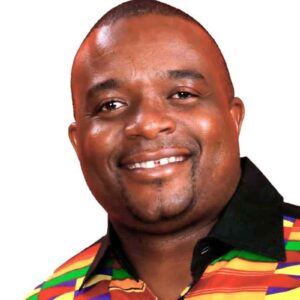
If you watch Nigerian morning television even occasionally, chances are you’ve seen someone refuse to let a politician dodge a question, lean forward with a raised eyebrow, and push back until they actually get an answer. That’s usually Rufai Oseni.
He’s become one of the most talked-about broadcasters in the country, and not always for comfortable reasons he gets praised for his courage and criticized for his style in roughly equal measure, which is honestly a sign you’re doing something that actually matters in journalism. So let’s properly unpack who this man is, where he comes from, how he built his career, and what’s actually known versus rumored about his personal life.
Who Is Rufai Oseni?
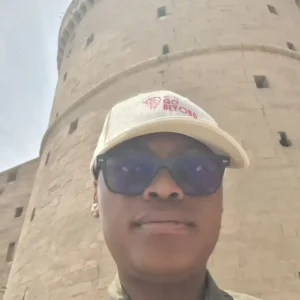
Rufai Oseni is a Nigerian television broadcaster, news anchor, radio presenter, author, and entrepreneur best known as co-host of Arise TV’s flagship morning show, one of the most-watched prime-time political programs in the country. He’s built a reputation around a very specific journalistic trait: he doesn’t let guests off the hook.
Where a lot of Nigerian TV interviews tend to be polite, deferential affairs especially when the guest is a minister, governor, or party chieftain Oseni treats every interview like a cross-examination, fact-checking claims live on air and repeating questions until he gets something resembling a straight answer.
That approach has made him a kind of lightning rod. Plenty of viewers see him as exactly the kind of accountability journalism Nigeria desperately needs, while critics accuse him of letting his own political leanings creep into his questioning. Either way, you can’t really talk about modern Nigerian broadcast journalism without his name coming up, and that alone tells you something about the size of the footprint he’s left.
Rufai Oseni’s Age and State of Origin
Oseni was born on April 8, 1980, which puts him in his mid-forties as of 2026. He hails from Odogbolu, a local government area in Ogun State, located in Nigeria’s southwest, and he’s of Yoruba ethnicity. That’s worth clarifying upfront because his surname occasionally causes confusion some people assume a connection to former Kaduna State Governor Nasir El-Rufai given the phonetic similarity, but there’s no established relationship there; Oseni’s roots trace specifically to Ogun State’s Yoruba heritage.
Although Ogun is his ancestral home, he actually grew up in Lagos State, where he received both his early and secondary education. That Lagos upbringing matters more than it might seem, because growing up in Nigeria’s largest, fastest-moving commercial city tends to expose you early to the kind of hustle, media noise, and competitive ambition that later defined his career. Picture a teenager navigating one of Africa’s most chaotic, opportunity-dense cities that environment has a way of either swallowing people whole or sharpening them into exactly the kind of relentless operator Oseni eventually became.
Early Life and Family Background
Oseni’s early life carried real hardship well before any of the television fame arrived. He lost his mother at a young age, an experience that inevitably reshapes a child’s sense of stability far earlier than most people have to confront it. His father, by contrast, remained a steady presence in his life for decades longer, passing away in 2022.
That’s a detail that briefly became politically charged in Nigeria during the heated 2023 presidential election season, a former presidential aide publicly alleged that Labour Party candidate Peter Obi had paid for the burial of Oseni’s father, implying it explained perceived favorable coverage. Both Oseni and Obi firmly denied the claim, with Obi stating plainly that no such payment had been made.
It’s a useful reminder of just how scrutinized public broadcasters become once they’re seen as influential even a parent’s funeral can get dragged into political point-scoring if you’re prominent enough. Beyond that episode, Oseni has remained notably private about extended family details, rarely naming siblings or discussing his upbringing’s finer points in interviews, which appears to be a deliberate, consistent boundary rather than an oversight.
Education
Here’s a detail that surprises a lot of people once they learn it: Oseni doesn’t actually hold a journalism degree. He studied Animal Anatomy and Physiology at the Federal University of Agriculture, Abeokuta (FUNAAB), graduating with a Bachelor of Science with Honours. If you’re picturing a future TV anchor sitting through lectures on livestock physiology rather than media theory, that contrast is exactly the point his path into journalism wasn’t paved by a conventional academic pipeline at all.
Later in his career, he added a Certificate in Entrepreneurship Management from the Lagos Business School at Pan-Atlantic University, where he reportedly served as class secretary for his cohort, and he also went through training at the Institute of Change Management Nigeria, where he became a certified Change Management Practitioner around 2016 to 2017.
What this educational arc really tells you is that Oseni built his journalism career almost entirely through hands-on experience and deliberate self-development rather than formal credentialing, layering in business and leadership training once he was already established, presumably to support his later ventures into entrepreneurship and media ownership.
Career Journey
Radio Beginnings
Oseni’s professional life started not on television but on radio, and he’s been candid that this groundwork shaped his on-air instincts well before cameras entered the picture. He worked across several stations, including Unique 103.1FM, Gold FM, and other outlets in cities like Warri and Ilesa, cutting his teeth on live broadcasting, audience engagement, and the kind of quick thinking that radio demands when there’s no script to fall back on.
Radio is a deceptively difficult training ground you don’t get the visual cues or production cushion that television offers, so presenters either develop sharp instincts fast or they don’t last. Over roughly eighteen years navigating these various stations and formats, Oseni steadily built the broadcasting muscle that would later translate into his combative, unrelenting television interview style.
It’s a classic case of paying dues in a less glamorous medium before the bigger platform arrives, and it’s part of why his on-screen confidence doesn’t come across as performative it’s clearly rooted in genuine repetition and experience.
Transition to Television and BBC Work
Beyond Nigerian radio and TV, Oseni built international credibility working as a BBC analyst on African affairs, offering expert commentary on the continent’s political and economic developments. Getting tapped by an organization like the BBC for analytical commentary isn’t something that happens to just any local broadcaster it requires demonstrating a depth of understanding that travels beyond domestic audiences and holds up to international editorial scrutiny.
This phase of his career effectively functioned as a bridge between his earlier radio grounding and his eventual rise to national prominence on Arise TV, giving him both broadened geopolitical context and an enhanced reputation that Nigerian audiences would later recognize when he became a household name. Think of it as the difference between a local sports commentator and one who gets called up to cover an international tournament the leap forces a noticeable sharpening of both knowledge and delivery.
Arise TV and Rise to Prominence
Oseni’s defining career chapter has been his role as co-host of Arise TV’s morning show, a position that’s turned him into arguably the most recognizable interrogator in Nigerian political broadcasting. The show airs during prime breakfast viewing hours and regularly hosts governors, ministers, party officials, and business leaders, putting Oseni in near-constant contact with the people actually running the country.
What’s made him stand out isn’t just access plenty of anchors get access it’s his refusal to accept evasive non-answers. He’s developed a reputation for repeating questions, calling out contradictions in real time, and generally treating interviews less like courtesy conversations and more like genuine accountability sessions. That style has occasionally boiled over into on-air friction, including a notable and widely discussed clash with a guest named Jesutega Onokpasa that drew renewed scrutiny over his professionalism and tone.
Critics argue he sometimes lets personal conviction override journalistic neutrality, while supporters counter that genuine accountability journalism was always going to ruffle feathers among people unaccustomed to being challenged. Either way, the show has become essential viewing for Nigerians following political affairs, precisely because Oseni’s presence makes it unpredictable in a way that scripted, softball interviews never are.
Entrepreneurship and NEO Media Group
Beyond the anchor desk, Oseni has built out a business identity as Chief Executive Manager of NEO Media Group, which he’s described as a pan-African media entity focused on shaping narratives and driving conversations across the continent.
Running your own media company while simultaneously anchoring a major national broadcast isn’t a small undertaking it requires the kind of split focus that most broadcasters never attempt, balancing editorial credibility on one side with business strategy and growth pressures on the other. He’s also positioned himself as a mentor to small business startups across Africa and describes himself as a tech enthusiast, suggesting his entrepreneurial interests extend well past traditional broadcasting into the broader digital and innovation economy.
This multi-hat approach journalist, entrepreneur, mentor, public speaker has become increasingly common among prominent African media figures who recognize that broadcasting alone, however high profile, doesn’t necessarily build long-term financial independence the way owning and operating your own ventures can.
Authorship and Public Speaking
Oseni has also built a presence as an author and global public speaker, frequently appearing as a featured guest at universities and conferences around the world to discuss media, leadership, and African affairs. Public speaking circuits like this tend to reward exactly the kind of confident, unfiltered communication style that’s made him notable on television, so the crossover makes sense the same directness that unsettles politicians on air apparently translates well into keynote and panel settings.
Combined with his authorship work, this side of his career has helped position him as more than just a TV face; he’s increasingly treated as a thought leader whose perspective on journalism, governance, and African development carries weight independent of his anchor desk.
It’s worth noting that this layered public profile broadcaster, author, speaker, entrepreneur has become something of a template for ambitious African media personalities looking to extend their relevance and income streams beyond a single employer’s payroll.
Personal Life: Wife and Children
This is genuinely the murkiest part of any Rufai Oseni biography, and it deserves an honest treatment rather than a confident-sounding guess. Several biography sites circulating online claim he’s married to a woman named Aisha Rufai, described as a lawyer, with the couple allegedly having two children and having held both a traditional wedding in Ogun State and a white wedding in Lagos.
Those same sources offer relationship-origin details, like the couple meeting through mutual friends and dating for roughly two years before marrying. However, this account isn’t corroborated by Oseni himself, by his employer, or by any verifiable journalistic reporting and other sources, including reports referencing his own older social media profile, have at points indicated he was single.
More recent, more careful reporting acknowledges this contradiction directly, concluding that his marital status and any details about a wife or children remain unconfirmed, and that he has never publicly discussed a spouse or confirmed having kids.
Given how consistently and deliberately private Oseni has stayed on this front declining to share family content on social media the way many public figures do the responsible position is to treat the “Aisha Rufai” narrative as unverified speculation rather than settled fact, while acknowledging that it’s the most commonly repeated version online. Instagram page is rufaioseni To Check up on later
Net Worth
Estimating Oseni’s net worth runs into a similar problem: there’s no audited or self-disclosed figure, so any number you encounter is an estimate built from visible income sources rather than confirmed financial records. That said, the broad shape of his earnings is reasonably easy to map out even without exact figures.
His income streams likely include his salary as a senior broadcaster and co-host at Arise TV, speaking fees from his international conference and university appearances, revenue tied to his entrepreneurial role at NEO Media Group, book sales from his authorship work, and consultancy or mentorship-related earnings.
Some online estimates place his net worth somewhere in the range of $500,000 to $700,000, though it’s important to flag that figure as a speculative aggregator estimate rather than a confirmed sum these calculations are typically built from comparable industry salaries and visible business activity rather than any actual disclosed accounting.
Given the breadth of his ventures, a comfortable upper-middle-tier net worth for a prominent Nigerian media personality with international visibility is plausible, but treat any precise dollar figure with appropriate skepticism.
Controversies and Public Perception
Part of what makes Oseni’s biography interesting is that he’s never been a passive, universally beloved figure he generates genuine, ongoing debate. During the 2023 Nigerian general election cycle, his perceived sympathy toward Labour Party candidate Peter Obi drew sustained criticism from rival camps, who argued his on-air analysis tilted too favorably in one political direction for someone supposedly maintaining journalistic neutrality.
The allegation that Obi had financially supported his father’s burial arrangements, though firmly denied by both men, became a flashpoint precisely because it fed into broader anxieties about media independence during an unusually polarized election.
Separately, his confrontational interviewing style has periodically drawn accusations that he prioritizes drama and personal agenda over the traditional journalistic principles of objectivity, fairness, and impartiality critics have specifically pointed to on-air clashes with guests as evidence he sometimes loses the composure expected of a neutral anchor.
Supporters push back hard against this framing, arguing that Nigerian journalism has historically suffered from excessive deference to power, and that Oseni’s refusal to accept vague political answers is precisely the corrective the industry needed. Whichever side of that debate you land on, the fact that his name consistently triggers passionate disagreement is itself a form of influence most broadcasters never achieve.
Conclusion
Rufai Oseni’s story is a genuinely unconventional one for someone who’s become a household name in Nigerian journalism a man who studied animal physiology rather than media studies, built his foundational skills grinding through regional radio stations, and only later assembled the combative, fact-checking interview style that’s made Arise TV’s morning show must-watch political television.
His career reflects a broader pattern among ambitious African media figures: layering broadcasting with entrepreneurship, public speaking, and authorship to build influence that outlasts any single employer relationship. What remains genuinely uncertain his marital status, the existence of a wife and children, and any precise net worth figure is worth stating honestly rather than papering over with confident-sounding details borrowed from unverified sources.
At the end of the day, Oseni has built his public reputation almost entirely on one trait: refusing to accept easy answers from powerful people. It seems only fair that his own biography hold itself to a similar standard of not pretending to know more than is actually verifiable.
Frequently Asked Questions
1. Where is Rufai Oseni’s state of origin? He hails from Odogbolu in Ogun State, southwestern Nigeria, and is of Yoruba ethnicity, though he grew up in Lagos State.
2. Did Rufai Oseni study journalism in school? No. He studied Animal Anatomy and Physiology at the Federal University of Agriculture, Abeokuta, and only entered journalism through radio work afterward, later adding business and change management training.
3. Is Rufai Oseni married, and does he have children? This remains genuinely unconfirmed. Some sources name a wife, Aisha Rufai, and two children, but Oseni has never publicly confirmed this, and other reports describe him as single or simply private on the matter.
4. What show is Rufai Oseni known for on Arise TV? He’s best known as co-host of Arise TV’s morning show, a prime-time political program where he’s built a reputation for tough, fact-checking interviews with politicians and public figures.
5. What is Rufai Oseni’s net worth? There’s no officially confirmed figure. Online estimates place it roughly between $500,000 and $700,000, drawn from his broadcasting salary, speaking fees, entrepreneurial ventures, and book sales, but this should be treated as an approximation rather than verified fact.




+ There are no comments
Add yours