






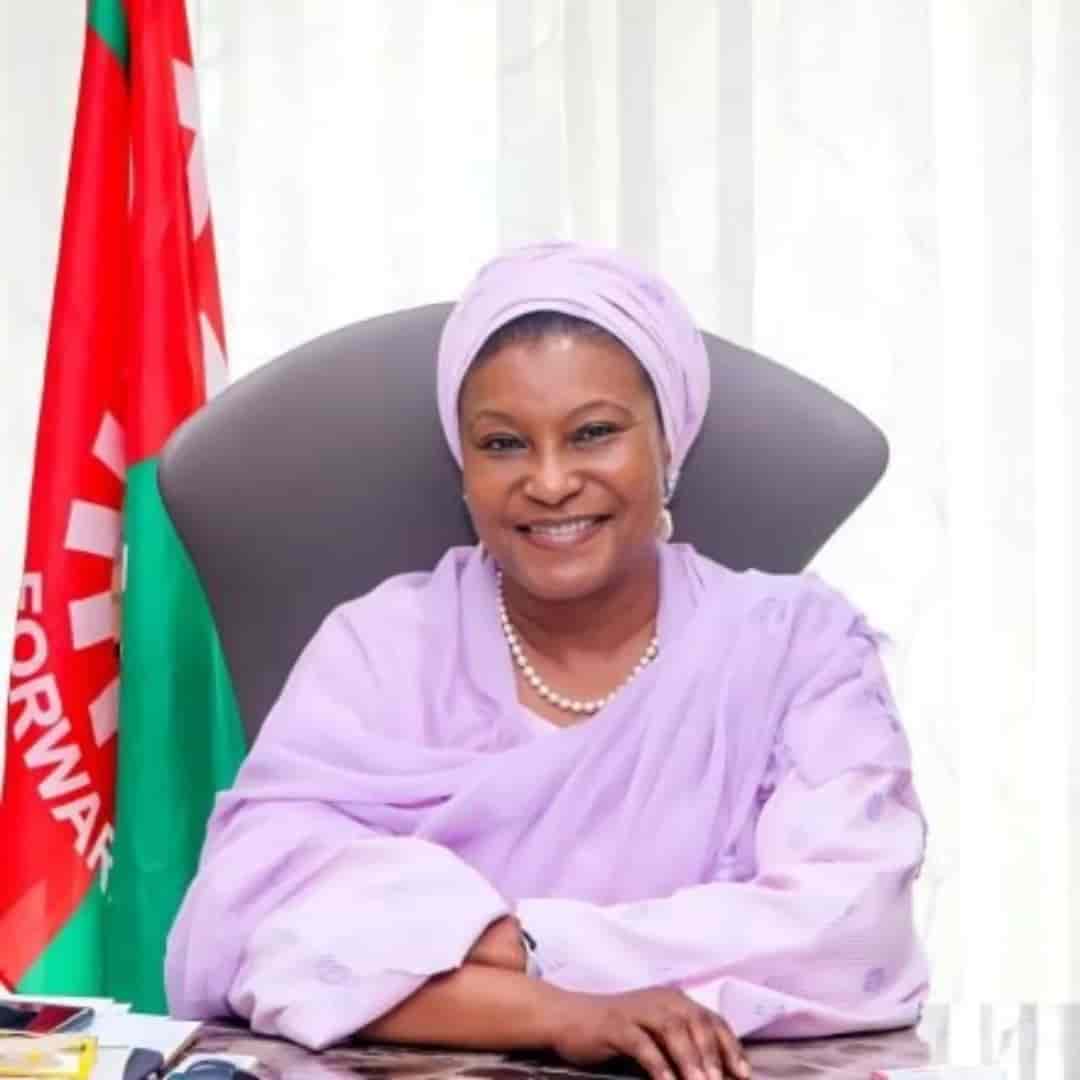
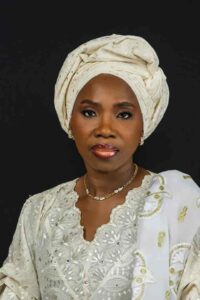
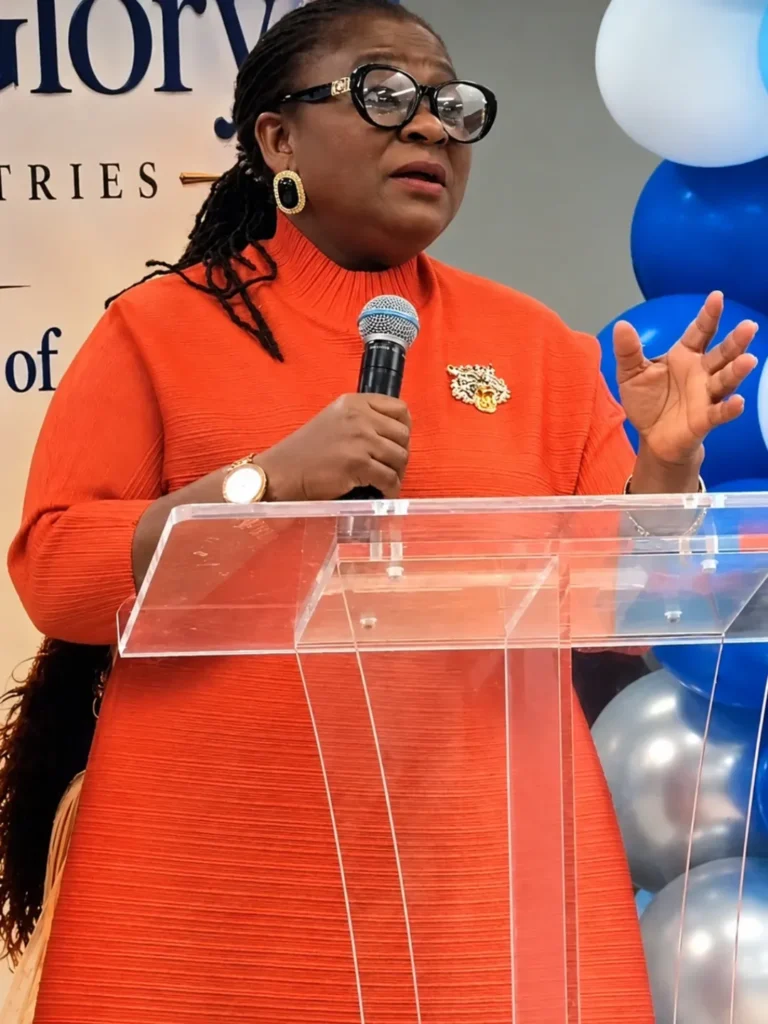
If you’ve followed Nigerian politics over the past few years, chances are you’ve come across the name Ireti Heebah Kingibe. She’s not your typical overnight political sensation far from it. This woman spent over three decades knocking on the door of elective office before finally walking through it in 2023, and that kind of persistence tells you a lot about who she really is.
Today, she sits in Nigeria’s Senate representing the Federal Capital Territory (FCT) under the Labour Party banner, and her story reads like a masterclass in patience paying off. Think of her journey as a marathon runner who kept lapping the same track for years, watching others cross the finish line first, until her moment finally arrived.
Before politics ever entered the picture, though, she built a respected career as a civil engineer, which honestly makes her rise in governance even more interesting because she brings a builder’s mindset to lawmaking. In this article, we’ll walk through everything worth knowing about her from her roots and education to her marriage, career, and the wealth she’s accumulated along the way.
Early Life and Family Background
Parents and Multi-Ethnic Heritage
Ireti Kingibe was born into a household that reads almost like a snapshot of Nigeria’s diversity itself. She came into the world on June 2, 1954, in Kano State, growing up in a family with roots stretching across multiple ethnic groups.
Her father, Abdulkadri Lanval, carried Yoruba and Fulani heritage, while her mother’s lineage traced back to Asaba and Bonny. Picture that for a second a child raised at the crossroads of Northern and Southern Nigerian cultures, absorbing different languages, traditions, and worldviews under one roof.
That kind of upbringing tends to shape people into natural bridge-builders, and if you look at how she’s navigated Nigeria’s notoriously fractious political landscape, that early exposure to diversity probably served her well. Her family isn’t just regionally diverse either; it’s politically connected at a fairly high level.
She’s the younger sister of Ajoke Muhammed, who was married to former Nigerian head of state Murtala Muhammed, which places her squarely within one of the country’s more historically significant political families.
State of Origin and Nationality
When people ask about her state of origin, there’s a bit of nuance worth unpacking. While she was born in Kano State, her father’s Yoruba-Fulani background and her mother’s Asaba-Bonny roots mean her ancestral ties stretch well beyond just one state.
She is, without question, a Nigerian by nationality born, raised in part within Nigeria, and now serving the country at the federal legislative level. That said, her early life wasn’t confined to Nigeria alone; her educational path eventually took her abroad, which we’ll get into shortly.
This blend of birthplace, ancestry, and international exposure gives her a profile that’s genuinely hard to box into a single regional identity, and frankly, that complexity mirrors Nigeria’s own layered identity as a nation stitched together from hundreds of ethnic groups.
Ireti Kingibe’s Age
Doing the math on Senator Kingibe’s age is straightforward once you know her birth year. She was born on June 2, 1954, which places her at 72 years old as of June 2026. This makes her one of the more senior voices currently serving in Nigeria’s Senate, and honestly, her age is part of what makes her story so compelling.
She isn’t a fresh-faced newcomer riding a wave of youthful ambition; she’s someone who built an entire engineering career, raised a profile in society, and pursued political office relentlessly across her fifties, sixties, and now her seventies.
There’s something genuinely admirable about that kind of staying power most people would have thrown in the towel after losing election after election, but she kept showing up, ballot after ballot, decade after decade.
Education
Early Schooling in Nigeria
Every great story has its foundation, and for Senator Kingibe, that foundation was laid right here in Nigeria. Her educational journey began at Emotan Preparatory School in 1966, after which she attended Queen’s College, Lagos between 1966 and 1967.
Queen’s College, for those unfamiliar, is one of Nigeria’s most prestigious girls’ secondary schools, and being a product of that institution already places her among a fairly elite group of Nigerian women who went through that system.
It’s the kind of school that produces doctors, lawyers, engineers, and yes, future senators institutions like this have quietly shaped generations of Nigeria’s female leadership class. Her time there gave her the academic grounding that would later support her pursuit of a technical, engineering-focused degree abroad, which wasn’t exactly a common path for Nigerian women of her generation.
Studies in the United States
From there, her academic path took an international turn. She attended Washington Irving High School in the United States from 1970 to 1973 for the remainder of her secondary education, before moving on to higher learning. She then furthered her studies at the University of Minnesota, earning a degree in Civil Engineering between 1975 and 1980.
Stop and think about how unusual that was at the time a Nigerian woman pursuing a hard engineering degree in America during the 1970s, a field still overwhelmingly dominated by men even in the West.
That’s not a small accomplishment; it’s the kind of decision that requires real grit and a willingness to swim against the current. This engineering background isn’t just a footnote in her biography either it became the professional bedrock she stood on for years before politics ever entered her life.
Husband and Marriage
Who Is Baba Gana Kingibe?
Senator Kingibe’s surname carries weight in Nigerian political circles, and there’s a very good reason for that. She is married to Baba Gana Kingibe, a name that anyone familiar with Nigeria’s 1990s political history will instantly recognize.
Ambassador Baba Gana Kingibe served as Secretary to the Government of the Federation from 2007 to 2008, Minister of Foreign Affairs from 1993 to 1995, Minister of Internal Affairs from 1995 to 1997, and Minister of Power and Steel from 1997 to 1998.
But arguably his most historically significant role came earlier he was the running mate to Chief Moshood Abiola in the annulled 1993 presidential election, one of the most painful and consequential political episodes in Nigeria’s democratic history.
Marrying into that kind of political legacy means Ireti Kingibe didn’t just inherit a famous surname; she married into the very fabric of Nigeria’s struggle for democracy. It’s almost poetic, in a way, that decades after that annulled election, she’d go on to win her own legislative seat through the ballot box, the very thing her husband’s ticket was denied.
Children and Family Life
This is one area where Senator Kingibe has kept things notably private. Details about her children have not been disclosed publicly, and that pattern holds true across nearly every credible source covering her life.
Multiple reports confirm that information about her children remains undisclosed to the public, which honestly says something about how she approaches her personal life versus her public one. In an era where politicians often parade their families for optics and goodwill, she’s chosen a different lane entirely, keeping a firm wall between her legislative work and her domestic life.
Whether that’s a deliberate strategy or simply personal preference, it’s worked there’s no tabloid trail of family scandals or staged photo-ops involving her children that you’d typically see with public figures of her stature. For someone with such a long public career, that level of privacy around her family is honestly kind of refreshing.
Career Journey
Civil Engineering Career
Long before she ever set foot in the Senate chamber, Ireti Kingibe was laying foundations literally. Between 1990 and 1994, she worked as a regional engineer for Lodigiani Nigeria Limited in Lagos, gaining hands-on experience in a field that demands precision, patience, and problem-solving under pressure traits that, frankly, translate pretty well into legislative work too.
She currently works as a Senior Partner with Kelnic Associates, based in Abuja, meaning her engineering career didn’t just end the moment politics came calling; she’s maintained a foothold in the profession that trained her.
That dual identity engineer and politician gives her a somewhat unique lens on infrastructure policy, something a lot of career politicians simply don’t have. When she talks about roads, bridges, or public works, she’s not just reciting talking points; she actually understands the technical side of what’s being built or, more often in Nigeria’s case, what isn’t being built fast enough.
Entry Into Politics
Her political awakening didn’t happen overnight. Kingibe joined partisan politics in 1990 when she became a member of the now-defunct Social Democratic Party (SDP), where she was appointed Adviser to the party’s national chairman.
That early role gave her a front-row seat to party machinery and strategy, which is often where future candidates cut their teeth before ever appearing on a ballot themselves. It wasn’t long before she made the jump from advisor to actual contender.
She ran as the candidate for the All Nigeria Peoples Party in the 2003 FCT senatorial election, marking her first real attempt at elective office an attempt that, like several that followed, didn’t end in victory but kept her firmly planted in the political arena.
Political Party Movements
If there’s one word that describes Senator Kingibe’s party history, it’s restless. She defected to the People’s Democratic Party (PDP) in 2006, then left to join the All Progressives Congress (APC) in 2014.
Her political affiliations eventually expanded to include the Social Democratic Party from 1990 to 1993, the All Nigeria Peoples Party from 1998 to 2006, the PDP from 2006 to 2014, the APC from 2014 to 2022, and finally the Labour Party from 2022 onward.
That’s five different political parties across roughly three decades a journey that mirrors Nigeria’s own turbulent party-political landscape during that era. Some critics might call that opportunism, but supporters would frame it differently: a candidate searching for the right platform to finally deliver results for her constituents, refusing to give up even when the political winds kept shifting beneath her feet.
Senate Career
2023 Election Victory
After years of trying and falling short, 2023 finally became her year. She was elected member of the Senate representing the FCT in the 2023 Nigerian Senate elections under the Labour Party, unseating multiple-term incumbent Senator Philip Aduda and becoming the second female senator-elect of the FCT.
That win wasn’t just personally vindicating it carried real symbolic weight for women in Nigerian politics, a space that remains heavily male-dominated even decades after independence. Becoming only the second woman ever elected Senator for the FCT positioned her as a role model for women across the country and underscored the growing importance of female leadership in national politics.
Before the votes were even counted, she’d already made a public pledge that resonated with voters tired of self-serving politicians: she promised to donate her basic salary, if elected, to a fund aimed at tackling infrastructural deficits in rural communities within the nation’s capital.
Role in the 10th Senate
Once sworn in, she wasted little time settling into a meaningful leadership role. On August 8, 2023, she was named Chairman of the Senate Committee on Women Affairs in the 10th Senate.
That appointment fits naturally with her broader public image as someone invested in gender equity and community development, and it’s given her a platform to push policy conversations that directly affect Nigerian women across the country.
This role has expanded her influence, allowing her to push for policies that support gender equality at a national legislative level, which is no small feat in a chamber where such issues can easily get buried under competing priorities.
Her position as Senator for the FCT also means she’s directly accountable to one of the most scrutinized constituencies in Nigeria after all, Abuja is the capital, and everyone’s watching how its representatives perform.
Net Worth
Now, here’s where things get a little murky, as they often do with Nigerian public figures. There is no publicly verified declaration of her net worth, and credible sources are pretty consistent in urging caution around any specific figures circulating online.
Some estimates place her net worth somewhere between one and three million dollars as of 2025, though it’s worth treating that range as a rough estimate rather than a confirmed fact.
What we can say with more confidence is that her wealth likely stems from a combination of sources: decades as a practicing civil engineer, her ongoing partnership at Kelnic Associates, and now her Senate salary and allowances.
Unlike some politicians whose finances raise eyebrows for opaque or questionable sources, her wealth profile tracks fairly logically with a long, legitimate professional career layered on top of public service which, in Nigeria’s political climate, is honestly a refreshing combination.
Achievements and Public Image
Beyond the titles and the election wins, what really stands out about Senator Kingibe is the consistency of her public image. She’s spent over thirty years in the political arena without the kind of scandal-driven headlines that follow so many of her peers, and that’s a track record worth noting.
Her engineering background lends her a credibility on infrastructure matters that purely career politicians often lack, and her commitment to women’s representation both through her committee leadership and her own historic election has made her something of a quiet trailblazer.
She’s also shown a willingness to challenge powerful figures publicly when she feels it’s warranted, which has occasionally put her in the headlines for friction with other political heavyweights, but that kind of pushback also signals she isn’t simply going along to get along.
Her decades-long persistence through five different political parties, rather than reading as flip-flopping, can just as easily be read as relentless commitment to eventually serving the people of the FCT and in 2023, that commitment finally paid off in the most concrete way possible. And also have a verified Instagram Account for friend and Family.
Conclusion
Senator Ireti Kingibe Biography story isn’t one of overnight success it’s one built brick by brick, much like the structures she once designed as a civil engineer. From her multi-ethnic upbringing and international education to her marriage into one of Nigeria’s most historically significant political families, every chapter of her life seems to circle back to themes of resilience and quiet determination.
Her three-decade political journey, marked by five party changes and multiple election attempts, finally culminated in her 2023 Senate victory, making her only the second woman ever elected to represent the FCT. Today, as Chairman of the Senate Committee on Women Affairs, she continues building a legacy centered on infrastructure, gender equity, and public accountability.
Whatever comes next in her career, her path so far offers a genuinely compelling lesson in persistence paying off, even when it takes decades longer than expected.
Frequently Asked Questions
1. How old is Ireti Kingibe? She was born on June 2, 1954, making her 72 years old as of 2026.
2. Who is Ireti Kingibe’s husband? She is married to Ambassador Baba Gana Kingibe, a veteran Nigerian diplomat and politician who served as Secretary to the Government of the Federation and was Chief Moshood Abiola’s running mate in the annulled 1993 presidential election.
3. What is Ireti Kingibe’s state of origin? She was born in Kano State, though her father’s Yoruba-Fulani heritage and her mother’s Asaba-Bonny roots give her a multi-ethnic ancestral background.
4. Does Ireti Kingibe have children? Details about her children have not been publicly disclosed, as she keeps her family life largely private.
5. What is Ireti Kingibe’s net worth? There’s no officially verified figure, though some estimates place it between one and three million dollars, drawn mainly from her civil engineering career and political service.







+ There are no comments
Add yours