




If you’ve followed Nigerian politics even loosely over the past decade, chances are you’ve come across the name Joe Igbokwe Biography at least once. He’s one of those figures who never really fades into the background, mostly because he refuses to let that happen. Joe Igbokwe is a prominent Nigerian politician, mechanical engineer, author, and one of the most vocal chieftains of the All Progressives Congress (APC) in Lagos State.
What makes him such an interesting case study isn’t just his job title, it’s the sheer range of hats he’s worn over the decades, from engineer to entrepreneur to government official to author. He currently holds a senior advisory position in Lagos State government, and his name pops up in headlines almost weekly, whether he’s commenting on national politics or finding himself at the center of a viral video.
Think of him as a kind of lightning rod, the type of public figure who draws strong reactions no matter what he says, and that’s precisely why so many people want to understand who he really is, where he came from, and how he built the life he currently leads.
What’s particularly fascinating about Igbokwe is the unusual position he occupies within Nigeria’s political landscape. What makes Joe Igbokwe particularly notable is his position as an Igbo man holding significant political influence in Lagos, a predominantly Yoruba state.
That’s no small feat in a country where regional and ethnic identity often shapes political alliances more than party manifestos do. He’s essentially built a career out of bridging two worlds that don’t always get along smoothly, and depending on who you ask, he’s either a pragmatic bridge-builder or a man who’s drifted too far from his roots.
Either way, his story offers a genuinely compelling window into how identity, politics, and personal ambition intersect in modern Nigeria. Throughout this article, we’ll walk through everything from his childhood in Anambra State to his most recent headline-grabbing moments in 2026, so buckle up because there’s a lot of ground to cover.
Joe Igbokwe’s Age and Date of Birth
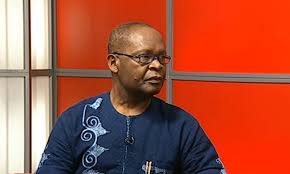
Let’s start with the basics, because honestly, age tells you a lot about the kind of historical eras a person has lived through and how that might shape their worldview. Joe Igbokwe was born on April 30, 1956, in Uruagu, Nnewi, Anambra State, Nigeria.
That means as of June 2026, he’s already crossed the 70-year mark, putting him firmly in the category of Nigerian elder statesmen who came of age during the country’s independence years and lived through the trauma of the civil war as a child. It’s worth pausing here to consider just how much history a man born in 1956 has personally witnessed:
Colonial rule giving way to independence, the Biafran war tearing through his home region, decades of military coups, and eventually the long, bumpy road toward the democratic Nigeria we know today.
Age isn’t just a number on a biography page, it’s almost like a lens through which you can interpret someone’s politics and priorities. Someone who survived the Nigerian Civil War as a young boy in Igboland carries a different relationship with concepts like national unity, secession, and federal power than someone born decades later with no direct memory of that conflict.
This context becomes especially important when you consider Igbokwe’s later, often controversial, stance against separatist movements like IPOB, a topic we’ll dig into further down. For now, just remember the number: he’s a man in his seventies who has spent over half a century navigating Nigerian public life in one form or another, and that longevity alone makes his career worth examining closely.
Early Life, Tribe, and State of Origin
Understanding where someone comes from often explains so much about where they end up, and Igbokwe’s roots are firmly planted in the heart of Igboland. Igbokwe hails from Uruagu, in Nnewi, Anambra State, Nigeria, a family deeply rooted in Igbo tradition. Nnewi itself is no random town either, it’s one of the most commercially vibrant communities in southeastern Nigeria, famous for producing some of the country’s most successful industrialists and traders.
Growing up in that environment, surrounded by a culture that prizes entrepreneurship, hard work, and communal pride, likely shaped Igbokwe’s later instincts toward business ventures and self-made success long before politics ever entered the picture.
His tribal identity as an Igbo man is central to understanding his entire public narrative, almost like the spine that holds the rest of his story together. It’s the very thing that makes his political alignment so noteworthy, because here’s a man whose ethnic roots trace back to the southeast, yet whose entire political career has unfolded in Lagos, a Yoruba-majority state.
That’s a bit like a fish deciding to build its whole life on land: not impossible, but it requires constant adaptation and a willingness to be seen differently by people on both sides. His Igbo heritage has also made him a frequent target of criticism from sections of his own ethnic community, particularly those sympathetic to Biafran separatist sentiments, since his political positions often clash sharply with theirs.
Family Background and Parents
Joe Igbokwe was born to the family of the late Chief and Mrs. Daniel Igbokwe, a household that, by most accounts, placed heavy emphasis on discipline, education, and moral upbringing. Not a ton of granular detail about his parents circulates publicly, which honestly tracks with a broader pattern you’ll notice throughout his biography.
Igbokwe is remarkably guarded about his private family life even though he’s anything but quiet in the public sphere. It’s an interesting contradiction, a man who’ll happily share his opinions on national politics at the drop of a hat but keeps the details of his childhood home largely under wraps.
What we do know suggests a stable, values-driven upbringing that prioritized schooling, something that clearly paid dividends given his eventual path into engineering and entrepreneurship. Families in that era and region, especially within Igbo communities known for their strong work ethic, often pushed their children hard toward academic achievement as a pathway out of poverty and toward respectability.
Whether or not Igbokwe had siblings who shared similar paths remains largely undocumented in public records, but the foundation laid in those early Nnewi years clearly set him on a trajectory toward bigger things, even if nobody around him at the time could have predicted just how far that trajectory would eventually carry him.
Education
Primary and Secondary School
Igbokwe’s educational journey began right where his story started, in Nnewi. Joe Igbokwe received his primary education at Uruagu Central School, Nnewi, where he graduated with honours in 1971 and earned his First School Leaving Certificate.
That early academic distinction is a small but telling detail, suggesting that even as a young boy he was the kind of student who took his books seriously rather than treating school as an afterthought. From there, he moved on to secondary education, and this is where things get a little more textured in terms of detail.
He attended Okongwu Memorial Grammar School in Nnewi, beginning his studies there in 1974 and eventually graduating, where he also served as the school’s Head Boy during the 1978/79 academic year. Being named Head Boy isn’t a trivial achievement, it usually signals that teachers and peers alike recognized leadership qualities in him well before adulthood, a thread that would later weave through his entire political career.
It’s almost poetic in hindsight: the boy who once kept order in his secondary school hallways grew into a man who’d spend decades trying to bring order, or at least his version of it, to Lagos State infrastructure and Nigerian political discourse.
University of Nigeria, Nsukka
After finishing secondary school, Igbokwe set his sights on tertiary education, and he landed at one of Nigeria’s most respected institutions. He gained admission to study Mechanical Engineering at the University of Nigeria, Nsukka, in Enugu State, where he graduated with a Bachelor of Engineering in 1985.
That gap between his secondary school graduation and his university completion suggests a path that wasn’t entirely linear, which is fairly common for many Nigerians of that generation given the economic and logistical hurdles that often delayed academic progress during the 1970s and 80s.
Choosing mechanical engineering wasn’t just a random pick either, it reflected a broader trend among ambitious young Igbo men of that era who saw technical and engineering disciplines as a reliable ladder toward economic stability and professional respect. After completing his studies, he undertook his mandatory National Youth Service Corps assignment in Ogun State.
That NYSC placement in Ogun State, right next door to Lagos, turned out to be more than just a footnote, it essentially planted him in the southwest region of Nigeria at exactly the moment he’d need local familiarity and connections to build the next chapter of his life. Sometimes the most consequential decisions in a person’s career aren’t the dramatic ones, they’re the quiet placements and assignments that just happen to put you in the right geographic spot at the right time.
Career Journey
Early Business Ventures
Before politics ever entered the conversation, Igbokwe was busy building things, literally and figuratively, in the private sector. After his NYSC assignment, Igbokwe moved to Lagos and ventured into private enterprise, founding companies such as Optimum Plaza and First Grade International Ltd in 1988.
This entrepreneurial chapter is honestly one of the most underappreciated parts of his biography, because it shows a man who didn’t simply wait around for political opportunities to fall into his lap. He rolled up his sleeves and built something from scratch in one of Africa’s toughest business environments, a city where competition is fierce and survival often depends on hustle as much as skill.
Igbokwe is also responsible for founding National Vision Newspapers Ltd, establishing himself as a media entrepreneur long before social media turned him into a household name through Facebook posts and viral videos. That media venture is particularly interesting in hindsight, almost like a foreshadowing of his later life as a prolific public commentator who never seems to shy away from a microphone or a keyboard.
These early ventures laid down financial roots and gave him an entrepreneurial credibility that would later inform his approach to public service, where he often speaks about infrastructure and development with the practical mindset of someone who’s actually built businesses rather than just theorized about economics from an armchair.
Entry into Lagos State Government
The turning point that transformed Igbokwe from a private businessman into a public servant came in the mid-2000s, and it’s arguably the single most defining career move of his life. He began his career with the Lagos State Government in 2006 as the first General Manager of the Lagos State Infrastructure Maintenance and Regulatory Agency (LASIMRA) and has since served in a variety of positions within the organization.
Stepping into that pioneer role meant he wasn’t just filling an existing position, he was essentially building the agency’s foundational structure and culture from the ground up, which says quite a bit about the trust placed in him by Lagos State leadership at the time.
In 2015, he was appointed as the pioneer Chairman of the Wharf Landing Fees Collecting Authority (WLFCA) in Apapa, a position he held until his appointment as a member of the cabinet of Governor Babajide Sanwo-Olu. That progression from infrastructure agency boss to wharf authority chairman to cabinet-level adviser reads like a textbook case study in how technical competence and political loyalty can combine to build a long, durable career inside Nigeria’s notoriously turbulent civil service.
He currently holds the position of Special Adviser for Drainage and Water Resources, a role that, frankly, matters a lot more than it sounds given how prone Lagos is to devastating floods during the rainy season. Drainage might not sound glamorous, but in a coastal megacity like Lagos, getting it wrong can mean homes destroyed and lives lost, so this is far from a ceremonial appointment.
Political Career and APC Chieftaincy
Igbokwe’s political identity is arguably even more prominent than his engineering credentials at this point, and it’s rooted in decades of party-building work. Engr. Joe Igbokwe was the State Chairman of the defunct Action Congress (AC), which later fused into the Action Congress of Nigeria (ACN), eventually merging with other parties to form the ruling All Progressives Congress (APC).
Watching a political party evolve through that many mergers and rebrandings is a bit like watching a river change course over decades, the water keeps flowing but the banks shift constantly, and Igbokwe rode every single one of those transitions without losing his footing or his relevance.
His loyalty to the APC, and particularly to President Bola Tinubu, has become one of the defining threads of his public persona. In a Facebook post, Igbokwe stated that Tinubu was elected to rework Nigeria and warned that any opposition adamantly standing in the way of his re-election bid would be made to pay for it.
That kind of combative, unapologetic rhetoric has become something of a trademark for him, the political equivalent of a boxer who never pulls a punch even when the crowd boos. He has also declared that Tinubu has no rival ahead of the 2027 presidential election, insisting there’s no magic anyone can perform to defeat him, and noting that Tinubu spent more than two decades preparing for the presidency before throwing his hat into the ring. Love him or loathe him, you can’t accuse Igbokwe of sitting on the fence when it comes to political commentary.
Author and Public Commentator
Beyond the boardrooms and government offices, Igbokwe has carved out a parallel identity as a writer, someone who’s clearly more comfortable putting his thoughts down in permanent ink than keeping them to himself.
He is also an accomplished author, having written several books including “The Igbo: 25 Years After Biafra” and “Heroes of Democracy.” Those titles alone tell you a lot about where his intellectual interests lie, namely the intersection of Igbo identity, post-civil war reconciliation, and Nigeria’s broader democratic journey.
Writing a book is no small undertaking, and choosing to tackle subjects this politically charged suggests a man who genuinely enjoys wading into debates most people would rather avoid.
His role as a public commentator has only intensified with the rise of social media, where his Facebook posts in particular tend to generate massive engagement, sometimes for the wisdom in them and sometimes simply for the controversy they stir up.
He’s become something of a fixture in Nigerian political Twitter and Facebook discourse, the kind of commentator whose name alone can spark a trending hashtag within hours of a fiery post. Whether people agree with him or not, there’s no denying that Igbokwe has mastered the art of staying relevant in an attention economy where yesterday’s news is often forgotten by lunchtime.
Joe Igbokwe’s Wife and Children
When it comes to his personal life, Igbokwe keeps things refreshingly private, almost like a vault that only opens a crack now and then. Igbokwe is happily married to Dr. (Mrs) Grace Igbokwe, with the union blessed with children, though the prominent politician doesn’t disclose much information about his family online.
That reticence is honestly a bit unusual for a man this vocal about practically everything else, and it speaks to a deliberate choice to draw a firm line between his public political battles and his private domestic world. Plenty of Nigerian politicians choose to parade their families for optics, using spouses and children as props during campaign season, but Igbokwe seems to operate from a different playbook entirely.
This kind of privacy actually makes a certain amount of sense when you consider how polarizing his public statements tend to be. If you’re going to make enemies through controversial political stances, perhaps the smartest move is to keep your family as far removed from that storm as humanly possible, almost like building a moat around the castle while you’re out fighting battles elsewhere.
We don’t have publicly confirmed details about the number of children he has, their names, or their current pursuits, and that absence of information appears to be entirely intentional rather than an oversight. It’s a reminder that even the most public figures get to decide where the curtain falls, and Igbokwe has clearly drawn his curtain tightly around his home life.
Joe Igbokwe’s Net Worth
Now let’s talk money, because curiosity about a public figure’s finances is about as natural as wondering what’s for dinner. As of 2025, Joe Igbokwe’s net worth is estimated to be between $2 million and $5 million, according to various sources.
That’s a fairly wide range, which honestly isn’t surprising given how notoriously difficult it is to pin down accurate net worth figures for Nigerian public officials, many of whom hold a mix of private business interests, government salaries, and investments that rarely get fully disclosed to the public eye. Some estimates place him among the richer Nigerian politicians, with figures suggesting a net worth around $5 million.
His wealth, whatever the exact figure turns out to be, traces back primarily to those early entrepreneurial ventures in Lagos, particularly Optimum Plaza and First Grade International Ltd, combined with decades of steady government appointments that came with their own salaries and benefits.
It’s worth remembering that net worth estimates for public figures, especially in Nigeria where financial disclosure laws aren’t always rigorously enforced, should be treated as educated approximations rather than gospel truth. Think of these figures less like a bank statement and more like a rough sketch, useful for context but not something you’d want to bet your last naira on.
Either way, by most reasonable estimates, Igbokwe sits comfortably among Nigeria’s financially successful political and business figures, a status built on decades of hustle rather than overnight luck.
Controversies and Public Image
Tensions with IPOB and the Igbo Community
No biography of Joe Igbokwe would be complete without addressing the elephant in the room: his fraught relationship with separatist sentiment in southeastern Nigeria. Igbokwe has faced ongoing criticism from supporters of Nnamdi Kanu-led IPOB, and past incidents have linked him to IPOB tensions, including the arson of his home in Anambra state back in October 2021.
That’s not a minor controversy, having your own home set ablaze is about as visceral and personal a consequence of political conflict as it gets, and it underscores just how seriously some segments of the Igbo separatist movement view his opposition to their cause.
What makes Joe Igbokwe particularly notable is his position as an Igbo man holding significant political influence in Lagos, a predominantly Yoruba state, which has made him both a bridge-builder and a controversial figure, as his political allegiances have often put him at odds with sections of the Igbo community, particularly supporters of Biafran agitation.
It’s a tightrope walk that few public figures would willingly attempt, choosing to plant your flag firmly against a movement that claims to represent your own ethnic group’s interests. Depending on your political leanings, you’ll either see him as a courageous voice of reason pushing back against secessionist extremism, or as someone who’s sold out his community’s aspirations for personal political gain. Either way, this tension has defined much of his public reputation over the past several years, and it shows no signs of cooling off anytime soon.
Joe Igbokwe Latest News
National Honours from President Tinubu
If you thought Igbokwe’s relevance might be fading with age, June 2026 proved otherwise in dramatic fashion. President Bola Tinubu conferred national honours on dozens of pro-democracy activists, journalists, civil society leaders and others who suffered persecution, detention and exile during Nigeria’s struggle for democracy, with Joe Igbokwe among the notable recipients.
The announcement came during Tinubu’s Democracy Day address on Thursday, June 12, 2026, recognising individuals who faced persecution, detention, exile, incarceration and other hardships in the fight to restore democratic rule. Being singled out for this kind of recognition is a significant moment, essentially a formal stamp of approval from the highest office in the land, validating decades of political loyalty and activism.
This honour arrived at a particularly interesting time, sandwiched between several weeks of viral controversy involving market confrontations, which we’ll get into next. It’s almost like watching two parallel storylines unfold simultaneously: one where the federal government is publicly celebrating his contributions to Nigerian democracy, and another where ordinary citizens on the street are expressing visceral frustration with him in viral videos.
That contrast alone tells you everything you need to know about how divisive a figure Igbokwe remains, even as he approaches his seventh decade of public life.
Ladipo and Alaba Market Incidents
Speaking of viral controversy, June 2026 turned out to be a genuinely eventful month for Igbokwe, and not entirely in a good way. On Friday, June 5, the APC chieftain narrowly escaped a mob attack at the popular Ladipo Market in Lagos State, an incident he narrated in a video posted to his official Facebook page the following day.
Ladipo Market, widely recognised as Nigeria’s largest auto spare parts market, is predominantly populated and operated by Igbo businessmen, and Igbokwe had visited the market that day simply to purchase spare parts for his vehicle before some individuals recognised him and gathered around him, openly criticising him.
Igbokwe denied being physically harmed but warned that if such an occurrence happens again and escalates, those involved would “collect big.” Speaking with Sunday PUNCH, he alleged that the hostility he faced at Ladipo Market was politically motivated, even as he dismissed reports that he was physically attacked during the incident.
Then, just over a week later, history seemed to rhyme rather uncomfortably. Igbokwe dismissed fresh reports circulating on social media alleging that he was beaten by traders and youths at the popular Alaba International Market in Lagos, refuting the claims in a video posted to social media. Two separate market confrontations within roughly a week is hardly a coincidence, and it suggests that public sentiment toward him in certain Lagos commercial spaces, particularly those with heavy Igbo trader populations, has grown noticeably tense.
Support for Tinubu’s 2027 Re-Election Bid
As Nigeria edges closer to the 2027 general election cycle, Igbokwe has positioned himself as one of Tinubu’s most vocal cheerleaders, leaving absolutely no ambiguity about where his loyalties lie. He has declared that Tinubu has no rival ahead of the 2027 presidential election, insisting that unseating him can only happen in the imagination of the opposition. That’s a bold, almost provocative claim to make this early in an election cycle, but it’s entirely consistent with the unapologetic style that’s defined his entire public career.
He has also warned that opposition leaders who have concluded plans to remove the president in 2027 over alleged economic mismanagement and other crises would be made to pay for standing in the way of Tinubu’s agenda. Whether you view that as a genuine prediction or simple political bluster, it’s clear Igbokwe intends to remain a fixture of pro-Tinubu messaging right through the 2027 polls.
Given his decades-long pattern of doubling down rather than backing away from controversy, there’s little reason to expect him to soften his tone anytime soon, regardless of how much pushback he encounters in market squares or on social media timelines.
Quick Facts Table Joe Igbokwe Biography
| Category | Details |
|---|---|
| Full Name | Joe Igbokwe |
| Date of Birth | April 30, 1956 |
| Age (as of 2026) | 70 years old |
| State of Origin | Anambra State |
| Hometown | Uruagu, Nnewi |
| Tribe | Igbo |
| University | University of Nigeria, Nsukka |
| Degree | Mechanical Engineering |
| Current Role | Special Adviser for Drainage & Water Resources, Lagos State |
| Political Party | All Progressives Congress (APC) |
| Wife | Dr. (Mrs) Grace Igbokwe |
| Net Worth | Estimated $2 million–$5 million |
Conclusion on Joe Igbokwe Biography
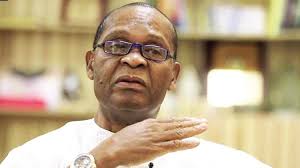
Joe Igbokwe’s life story is a study in contradictions that somehow all fit together into a coherent, if controversial, whole. He’s an Igbo man who built his political home in Lagos, an engineer who became one of Nigeria’s most recognizable political voices, and a private family man who’s anything but private when it comes to national politics.
From his humble beginnings in Nnewi to his decades-long climb through Lagos State bureaucracy and APC party structures, his career reflects both genuine ambition and an unflinching willingness to court controversy when he believes in a cause. As 2026 unfolds with national honours on one hand and mob tensions on the other, it’s clear his story is far from finished, and Nigerians will likely keep watching, debating, and reacting to whatever he says or does next.
Also Read:
FAQs on Joe Igbokwe Biography
1. How old is Joe Igbokwe in 2026? He was born on April 30, 1956, making him 70 years old as of mid-2026.
2. What tribe is Joe Igbokwe from? He is Igbo, hailing from Uruagu in Nnewi, Anambra State.
3. What did Joe Igbokwe study in university? He studied Mechanical Engineering at the University of Nigeria, Nsukka, graduating in 1985.
4. Who is Joe Igbokwe’s wife? He is married to Dr. (Mrs) Grace Igbokwe, and the couple has children, though family details are kept largely private.
5. What is Joe Igbokwe’s current role in government? He serves as Special Adviser for Drainage and Water Resources to Lagos State Governor Babajide Sanwo-Olu.






+ There are no comments
Add yours